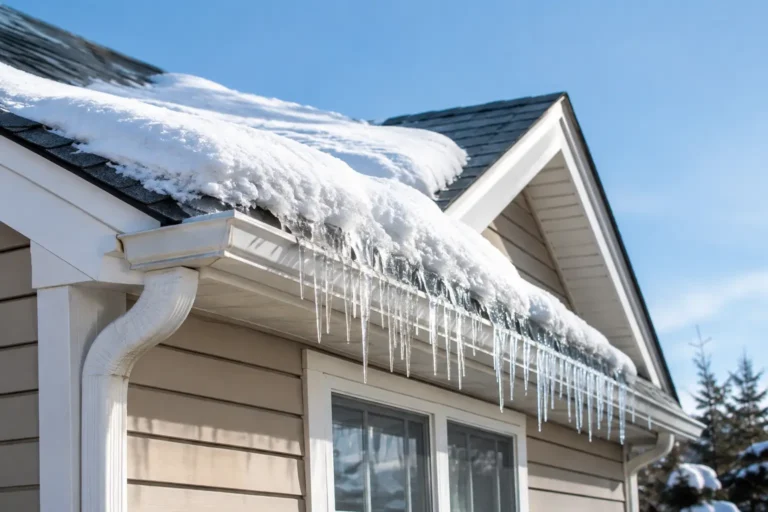
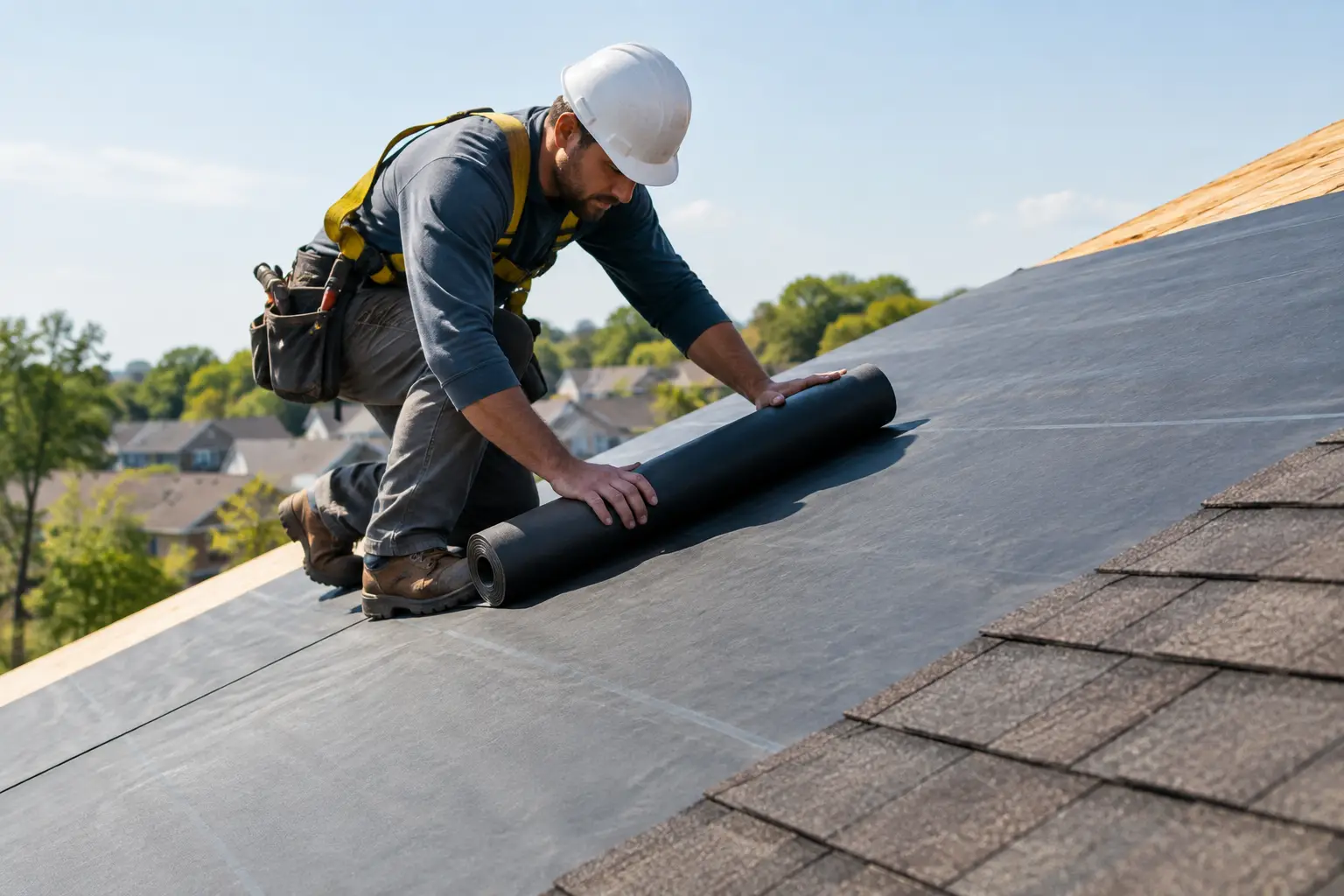
A roof can look perfectly sound from the street and still have a weak point beneath the shingles. Roofing underlayment is the protective layer installed between the roof deck and the finished roofing material. When wind-driven rain reaches beneath a shingle, ice dams form near an eave, or condensation develops in the attic, this layer helps keep moisture from reaching the wood structure below.
For Cedar Grove-area property owners, that protection matters. New Jersey roofs handle hard rain, snow, freeze-thaw cycles, summer heat, and heavy winds. A quality roof system is more than shingles. It is a set of properly selected and installed components working together to protect your home or commercial property for the long term.
What Roofing Underlayment Does
Underlayment is often called a secondary water barrier, and that is its most important job. Shingles, metal panels, and other roof coverings are designed to shed water. They are not meant to be the only line of defense against water intrusion.
If roofing materials are damaged, lifted by wind, or temporarily overwhelmed during severe weather, underlayment can direct water safely toward the eaves instead of allowing it to soak into the roof deck. It also separates the roof covering from the decking, which can improve the performance and lifespan of the overall roofing system.
A properly installed underlayment supports several important goals: water protection, reduced risk of deck rot, better resistance at vulnerable roof areas, and a stronger foundation for a manufacturer-backed roofing warranty. It cannot repair failing shingles or replace proper flashing, but it is a critical layer that should never be treated as an afterthought.
The Main Types of Roofing Underlayment
The right material depends on the roof design, the finished roofing system, local code requirements, and the conditions your property faces. An experienced roofing contractor should explain the options clearly rather than using the same material on every project.
Asphalt-Saturated Felt
Traditional felt underlayment has been used on homes for generations. It is typically available in lighter and heavier weights and remains a familiar option for many asphalt shingle roofs.
Felt can provide dependable performance when it is installed correctly and kept dry during construction. However, it is heavier than synthetic alternatives, can wrinkle when exposed to moisture, and may tear more easily under foot traffic. Its lower upfront cost can make it appropriate for certain projects, but it is not always the best long-term choice.
Synthetic Underlayment
Synthetic underlayment is widely used on modern roofing projects because it is lightweight, durable, and more resistant to tearing. It is easier for installers to handle, often lays flatter than felt, and can offer improved protection during the installation process.
Not all synthetic products are the same. Thickness, slip resistance, water resistance, and manufacturer compatibility vary by product. For a premium shingle system, using an approved synthetic underlayment can help support the complete system warranty while delivering reliable performance through changing New Jersey weather.
Self-Adhered Ice and Water Barrier
Self-adhered membrane, often called ice and water barrier, is designed for the roof’s most leak-prone locations. It adheres directly to the deck and seals around many nail penetrations, creating a stronger water barrier than standard underlayment alone.
It is commonly installed along eaves, in valleys, around chimneys, near skylights, and at roof-to-wall transitions. These areas collect or redirect water, which makes careful protection essential. In northern climates like ours, ice and water barrier is particularly valuable near the lower edge of the roof, where melting snow can refreeze and force water beneath shingles.
Why Material Alone Is Not Enough
High-quality roofing underlayment can only perform as intended when the roof deck and installation details are handled correctly. Before a new roof is installed, the contractor should inspect the decking for rot, delamination, soft spots, and moisture damage. Covering compromised decking with a new underlayment does not solve the underlying problem.
Installation details matter just as much. Underlayment needs correct overlap, secure fastening, and clean integration with flashing, drip edge, vents, and penetrations. Improper laps can channel water beneath the material. Poorly protected valleys can become a source of recurring leaks. Gaps around a chimney or skylight can allow moisture into areas that are difficult and expensive to repair.
The order of installation also matters. For example, drip edge placement can differ at the eaves and rakes to manage water correctly. These are not cosmetic details. They are part of a roof system designed to direct water away from the structure.
Underlayment and Ventilation Work Together
Homeowners sometimes assume a roof leak always starts with damaged shingles. In reality, moisture problems can also originate inside the attic. Warm, humid air from the home can rise into an improperly ventilated attic, condense on cold surfaces, and damage the roof deck from below.
Underlayment is not a substitute for attic ventilation or insulation. A complete roof evaluation should consider intake ventilation at the eaves, exhaust ventilation near the ridge, insulation levels, bathroom vent termination, and signs of condensation. When these components work together, they help control heat and moisture, reduce stress on shingles, and protect the decking beneath the roof.
This is especially relevant when replacing an older roof. A new shingle color may improve curb appeal, but the greater value comes from correcting the hidden conditions that can shorten the life of the new system.
When Underlayment Needs Attention
Underlayment is concealed, so it is not something property owners can inspect directly after installation. Still, several signs may point to a problem within the roof system: recurring leaks after storms, water stains on ceilings, damp insulation, unexplained attic moisture, curling shingles, or visible deck sagging.
If a roof is nearing the end of its service life, replacing only a few shingles may not address failures in the layers below. During a full roof replacement, the existing roof covering is removed so the contractor can inspect the deck and install new underlayment, flashing, and other system components correctly.
For commercial properties, the principle is similar, although the materials and installation methods differ. Low-slope and flat roofing systems require membranes, insulation, drainage planning, and edge details suited to their specific design. A qualified contractor should evaluate the full assembly rather than offer a one-size-fits-all repair.
Choosing the Right Protection for Your Roof
The best underlayment is not automatically the most expensive product. The right choice depends on your roof’s slope, complexity, shingle or metal system, attic conditions, and exposure to weather. A simple ranch roof has different needs than a steep, multi-level roof with valleys, skylights, dormers, and chimney penetrations.
It is also worth considering warranty requirements. Manufacturer warranties may require approved accessory products and installation practices. Working with a credentialed contractor helps ensure the roof system is built to meet those specifications, not simply installed to look finished on the day the crew leaves.
At All Professional Remodeling Group, we approach roof replacement as a complete protection project. That means evaluating the condition of the deck, selecting compatible system components, addressing vulnerable areas, and installing every layer with long-term performance in mind. A roof should provide confidence during the next storm, not just a fresh appearance.
If you are planning a roof replacement or investigating a leak, ask what will be installed beneath the shingles and where ice and water barrier will be used. The answer can tell you a great deal about the level of protection your property will receive. The strongest roofs are built from the deck up, with careful attention to the layers you may never see but rely on every day.