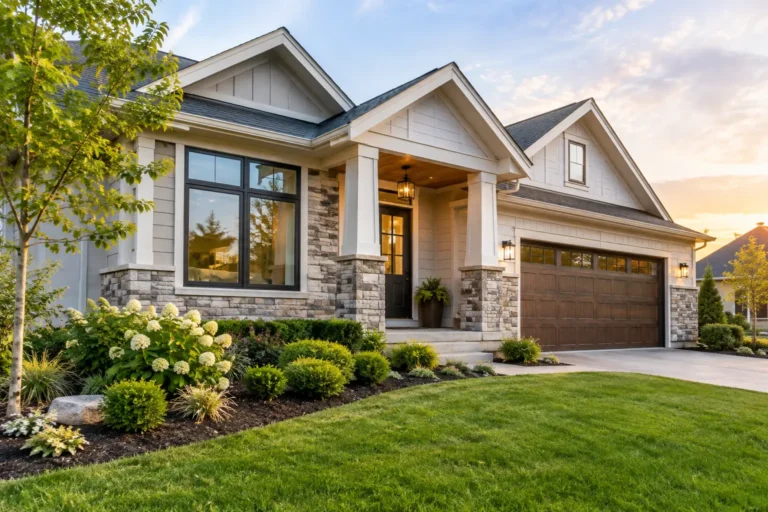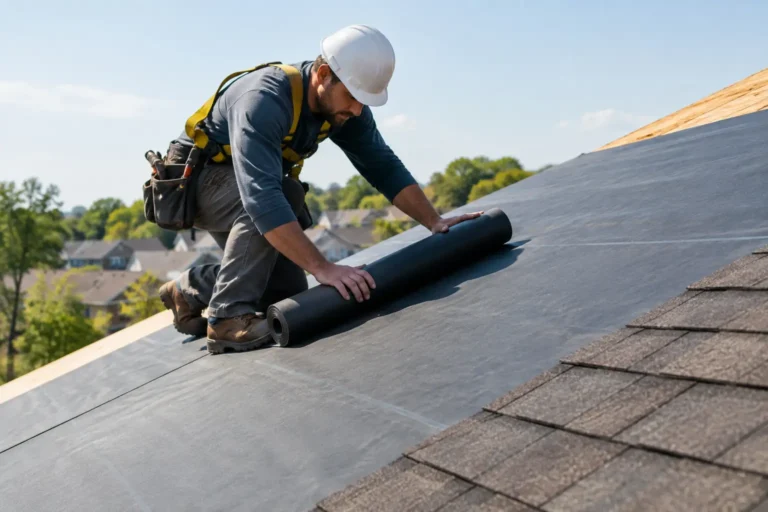
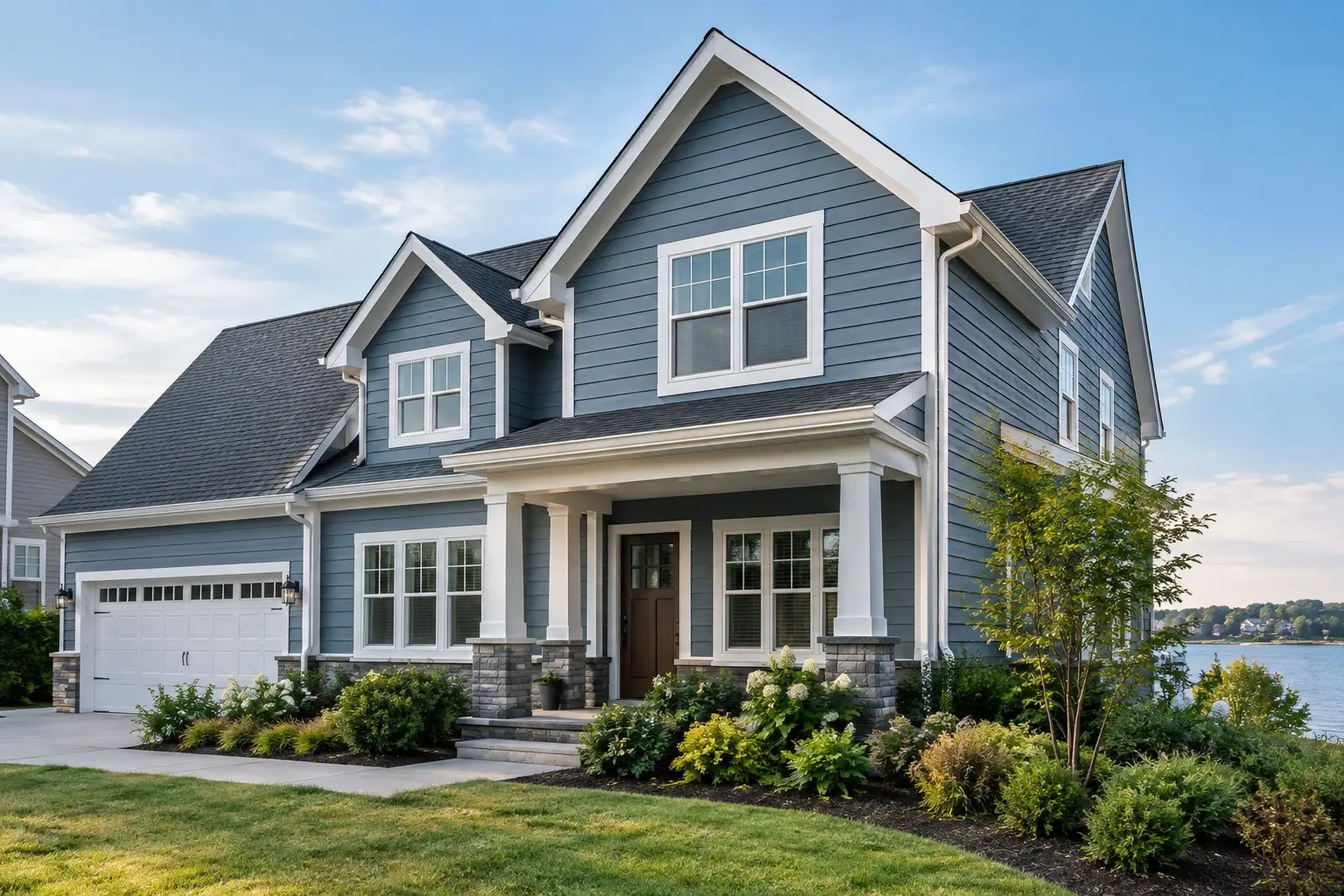
A home’s siding has to do more than look good from the curb. In northern New Jersey, it must stand up to driving rain, freeze-thaw cycles, summer humidity, wind, and the everyday wear that can leave older exterior materials looking tired. This fiber cement siding guide explains what homeowners should know before choosing fiber cement for a replacement project.
Fiber cement siding is a premium exterior option for property owners who want the appearance of painted wood with stronger resistance to moisture, pests, fire, and weather. It is not the least expensive siding installed, and it is not a material to trust to an inexperienced crew. When the product and installation are right, however, fiber cement can provide long-term protection, curb appeal, and real value for a New Jersey home.
What Is Fiber Cement Siding?
Fiber cement siding is a manufactured material made from cement, sand, water, and cellulose fibers. The finished boards, shingles, and panels are designed to replicate traditional wood lap siding, cedar shake, board-and-batten profiles, and modern panel styles without the common weaknesses of natural wood.
James Hardie is one of the best-known fiber cement brands, and for good reason. Its siding is engineered for specific climate zones and comes in a broad range of profiles and colors. That matters in Cedar Grove and surrounding communities, where an exterior must handle changing seasons without compromising the look of the property.
Unlike vinyl, fiber cement is rigid and substantial. It does not become soft in high heat or easily dent from an impact. Unlike wood, it does not provide a food source for termites and is not prone to rot when it is properly installed and maintained. Those distinctions make it a strong consideration for homeowners planning to stay in their home or preparing an exterior upgrade that supports resale value.
Fiber Cement Siding Benefits That Matter Locally
Durability is usually the first reason homeowners consider fiber cement. The material resists many of the conditions that shorten the service life of traditional siding: moisture exposure, insect activity, warping, and heat-related distortion. It is also noncombustible, though the complete wall assembly and local code requirements still determine a home’s overall fire performance.
Appearance is another major advantage. Fiber cement can create crisp shadow lines and deep wood-grain texture that many homeowners prefer over standard vinyl siding. It works equally well on a colonial home needing classic lap siding, a craftsman-style property with shake accents, or a more contemporary renovation using smooth vertical panels.
Color retention deserves a closer look. Factory-finished siding can provide a consistent, durable finish with fewer painting concerns in the early years. Primed siding gives homeowners more color flexibility, but it must be painted after installation. Neither option is maintenance-free, yet both can offer a more polished long-term appearance than materials that fade or become difficult to clean.
Fiber cement also pairs well with a full exterior remodeling plan. New siding can be coordinated with replacement windows, doors, gutters, trim, roofing colors, and architectural details. Rather than improving one component in isolation, a properly planned exterior project helps protect the building envelope while giving the property a unified look.
The Trade-Offs to Consider Before You Choose
A dependable contractor should be direct about the limitations as well as the benefits. Fiber cement siding costs more than basic vinyl siding in many cases. The boards are heavier, installation takes more time, and the work requires specialized cutting methods and careful flashing details. Premium materials and skilled labor are a significant part of the investment.
It also needs professional handling. Fiber cement can crack if it is stored, carried, fastened, or cut incorrectly. Improper clearances from roofing, decks, steps, soil, and masonry can allow moisture problems to develop over time. A siding project may look complete on installation day while concealing details that lead to avoidable repairs later.
Maintenance is limited but real. Homeowners should rinse off dirt and pollen as needed, inspect caulked joints and painted surfaces periodically, and address any damaged boards promptly. Depending on the finish, repainting may eventually be necessary. This is still far less demanding than maintaining traditional wood siding, but it is not a set-it-and-forget-it exterior product.
For some homes, vinyl remains a sensible choice. It can be more affordable, requires little ongoing maintenance, and works well for property owners with a tighter budget. Fiber cement is often the better fit when appearance, impact resistance, design flexibility, and long-term exterior performance are higher priorities.
A Fiber Cement Siding Guide to Installation Quality
Installation quality determines whether fiber cement siding delivers on its promise. The siding boards are only one layer in a wall system. Behind them, the house needs a properly prepared substrate, weather-resistive barrier, flashing, and details that direct water away from vulnerable areas.
The project should begin with a careful inspection of the existing siding, trim, window and door openings, roof-to-wall transitions, and any signs of water intrusion. Installing new siding over concealed rot or damaged sheathing does not solve the underlying problem. Necessary repairs should be identified before the new material covers them.
Flashing is especially important around windows, doors, chimneys, rooflines, and horizontal trim. Water naturally follows gravity, but wind can push it into joints and openings. Correctly installed flashing creates a path for water to drain outward instead of reaching the framing or interior wall cavities.
Fastener placement, spacing, and board clearances must follow manufacturer specifications. Fiber cement should not sit directly against soil, roofing, or other surfaces where standing water and debris can collect. These details may seem minor, but they protect the warranty and help prevent moisture-related deterioration.
A qualified installer should also know how to manage silica dust during cutting. Professional crews use approved cutting methods, dust-control practices, and appropriate jobsite safety procedures. This is another reason fiber cement installation should not be treated as a typical do-it-yourself siding project.
Cost Factors for New Jersey Properties
There is no responsible flat price for fiber cement siding without seeing the property. The size and height of the building, siding profile, trim package, condition of the existing walls, accessibility, window count, and design complexity all influence the final estimate.
A straightforward ranch home with simple lap siding will have different labor requirements than a multi-story home with gables, dormers, stone transitions, detailed trim, and extensive repair needs. Removal and disposal of existing materials, scaffolding, protection of landscaping, and permit requirements can also affect project cost.
The better question is not simply, “What does fiber cement cost?” It is, “What does the complete exterior system include?” A thorough proposal should clarify materials, preparation, removal, flashing, trim, finish, cleanup, warranty coverage, and any repairs anticipated after old siding is removed. Clear scope protects homeowners from vague allowances and unexpected shortcuts.
For commercial and multifamily property stakeholders, the same principle applies. Material selection should account for building use, maintenance planning, code requirements, access, and the need to maintain a professional appearance over time. Fiber cement can be a practical choice for select commercial facades, but the wall assembly and building-specific conditions should guide the decision.
Choosing the Right Style and Finish
The most successful siding projects respect the architecture of the home. Traditional lap siding remains a reliable choice for many New Jersey colonials and split-level homes. Vertical board-and-batten can add height and contrast on gables or entry areas. Shingle-style siding can bring texture to accent walls without the maintenance demands of natural cedar.
Trim deserves equal attention. Wider trim boards around windows and doors can create a more substantial, finished appearance, while clean, simpler trim may suit a modern exterior. Color selection should work with the roof, masonry, driveway, and neighboring visual context. A dark siding color can look striking, but it may show dust and require thoughtful coordination with white or lighter trim.
If the roof is approaching the end of its life, it is often wise to plan both improvements together. Roof-to-wall flashing, trim transitions, and color coordination are easier to manage when one experienced exterior contractor oversees the full scope. All Professional Remodeling Group helps local property owners evaluate these connected decisions so the finished exterior performs as well as it looks.
Questions to Ask Before Signing a Contract
Before selecting a siding contractor, ask about fiber cement-specific experience, manufacturer installation requirements, licensing, insurance, written warranty coverage, and how hidden wall damage will be handled. Request a detailed written scope rather than relying on a verbal price or a broad description of the work.
You should also ask who will be on the job, how landscaping and walkways will be protected, where debris will be placed, and how daily cleanup will be managed. A professional installation should be organized from the first material delivery through the final walkthrough.
The lowest proposal is not always the best value, particularly when it leaves out flashing upgrades, trim details, wall repairs, or proper removal of old materials. Compare scope, credentials, workmanship protections, and communication - not just the bottom-line number.
A well-planned fiber cement project gives your property more than a fresh exterior. It gives you a durable layer of protection built for the seasons ahead, with details that make the home look cared for every time you pull into the driveway.