A commercial roof rarely fails without warning. Ponding water, loose flashing, clogged drains, and small membrane punctures can quietly turn into interior leaks, damaged insulation, and costly business interruptions. Knowing how to maintain a commercial roof gives building owners and property managers a practical way to protect their investment, extend roof life, and plan repairs before they become emergencies.
For commercial properties in Cedar Grove and across Northern New Jersey, maintenance must account for heavy rain, wind, snow loads, freeze-thaw cycles, and summer heat. The right plan depends on the roof system, its age, the building's drainage design, and how the property is used. Still, consistent professional oversight is the foundation of lasting roof performance.
Start With a Scheduled Inspection Plan
Commercial roofs should be professionally inspected at least twice a year, typically in the spring and fall. A spring inspection identifies winter-related damage, while a fall inspection prepares the roof and drainage system for leaves, ice, and snow. Additional inspections are wise after major windstorms, heavy rainfall, hail, or any event that may have affected rooftop equipment.
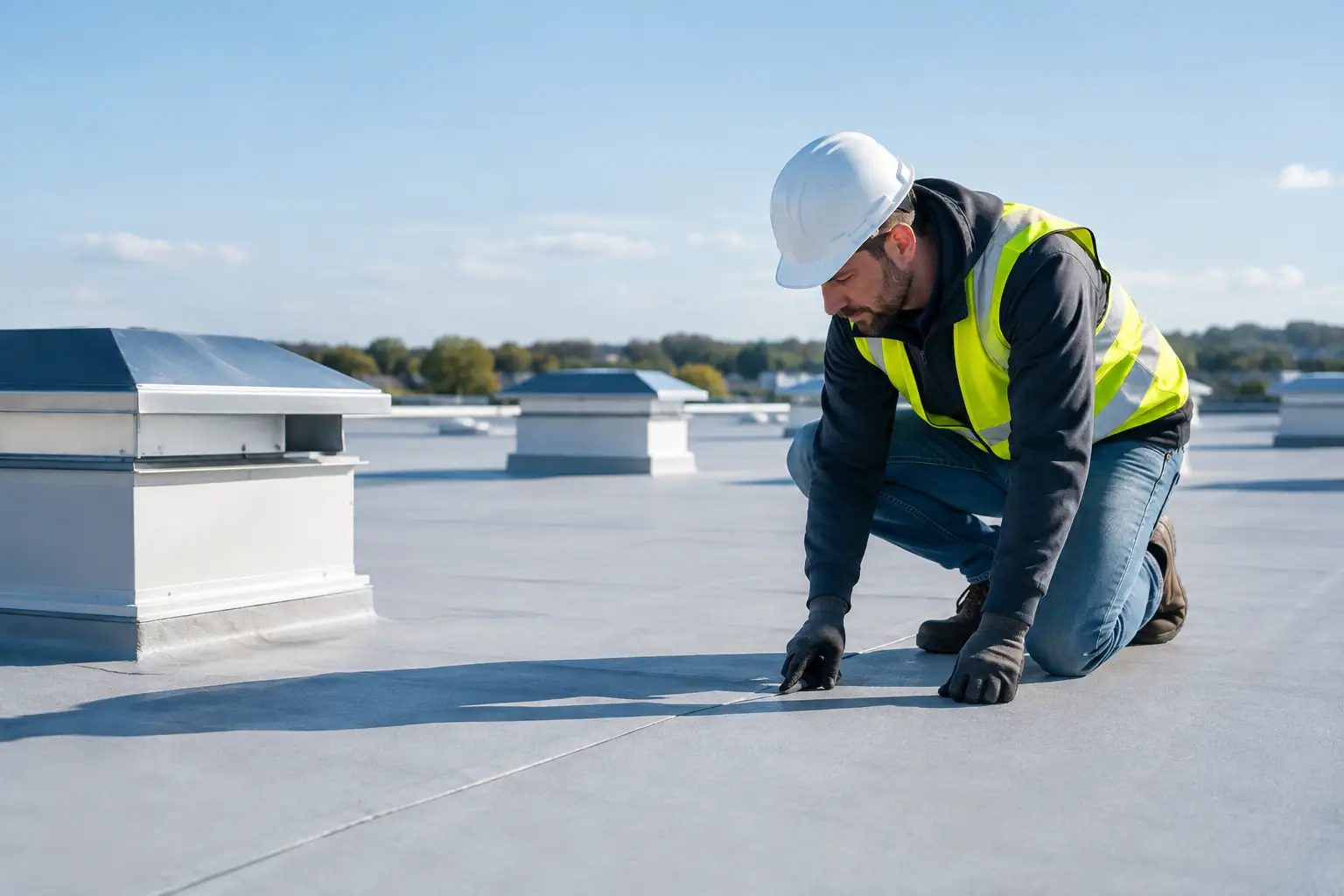
A trained roofing professional looks beyond obvious leaks. They inspect membrane seams, field areas, penetrations, edge metal, flashing, curbs, drains, scuppers, and areas around HVAC equipment. On a flat or low-slope roof, minor changes in these details can allow water below the membrane long before stains appear inside the building.
Inspection frequency may need to increase for older roofs, roofs with frequent foot traffic, or properties surrounded by trees. A newer system with a strong manufacturer warranty still benefits from scheduled checks. Warranty coverage does not prevent storm debris, blocked drains, or damage caused by another contractor working on the roof.
Keep Water Moving Off the Roof
Standing water is one of the most common threats to a commercial roofing system. It adds weight, accelerates material wear, encourages debris buildup, and exposes weak seams or flashing details. While some low-slope roofs may hold shallow water briefly after a storm, water that remains for more than 48 hours should be evaluated.
Clear roof drains, gutters, scuppers, and downspouts routinely, especially during the fall. Leaves, branches, tennis balls, and windblown debris can block drainage paths quickly. If the building has internal drains, make sure strainers are secure and clean. If it relies on scuppers or gutters, inspect those components for clogs, loose connections, corrosion, and improper pitch.
Drainage concerns are not always solved by cleaning alone. Persistent ponding can point to structural settling, insulation compression, inadequate slope, or undersized drainage. A qualified commercial roofer can determine whether targeted repairs, tapered insulation, drain modifications, or another solution is appropriate. The best option depends on the roof's condition and budget, but ignoring ponding usually costs more over time.
Address Small Repairs Before They Spread
Commercial roof maintenance is most cost-effective when repairs are made early. A small puncture in a single-ply membrane, an open seam, cracked sealant, or loose flashing may be a straightforward repair when discovered promptly. Left exposed to weather, that same issue can allow moisture into insulation and deck materials, expanding both the scope and cost of the work.
Watch for warning signs inside the property as well as on the roof. Ceiling stains, peeling paint, unusual odors, wet insulation, mold growth, or water near electrical fixtures require prompt attention. The visible interior symptom may be several feet away from the actual roof opening, so leak tracing should be handled by an experienced professional rather than guessed at with caulk or patch materials.
Temporary repairs have a place during an active leak or severe weather event, but they should not become a long-term maintenance strategy. Repeated patching can conceal a broader issue, particularly on an aging roof with deteriorating seams or saturated insulation. A thorough assessment helps determine whether repair remains the responsible choice or whether restoration or replacement offers better long-term value.
Control Rooftop Traffic and Protect Vulnerable Areas
Many commercial roofs are damaged by routine activity rather than weather. HVAC technicians, electricians, cable installers, solar contractors, and maintenance crews may need roof access throughout the year. Without designated walk paths, tools, foot traffic, and dropped equipment can puncture or scuff the roofing surface.
Establish clear access routes and use approved walkway pads where maintenance personnel regularly travel. Keep records of who accesses the roof and why. If a new unit, vent, pipe, or equipment curb is installed, have the roofing contractor inspect and properly flash the penetration. This protects the roof system and helps preserve warranty compliance.
Avoid storing materials, unused equipment, or sharp debris on the roof. Even lightweight items can shift in high winds, damage the membrane, or block drains. Rooftop housekeeping is a simple part of maintenance, but it directly supports drainage, safety, and membrane protection.
Maintain Flashing, Seams, and Roof Edges
Roof membranes are only as dependable as the details around them. Flashing seals the transitions where the roof meets walls, parapets, pipes, skylights, equipment curbs, and other penetrations. Seams join sections of roofing material. Edge metal secures the perimeter, where wind forces are often strongest.
These areas deserve close attention during every inspection. Look for lifting, cracking, gaps, rust, loose fasteners, failed sealant, or separation around penetrations. On a metal roof, inspect fasteners, panel laps, sealant points, and areas around rooftop accessories. On modified bitumen, EPDM, TPO, or PVC roofs, inspection should focus on the material-specific seam and flashing conditions.
Material matters because maintenance methods are not interchangeable. A repair product that works on one membrane can be incompatible with another. Using the wrong coating, adhesive, or sealant may cause damage or create warranty concerns. Professional identification of the roof system should always come before a repair recommendation.
Document the Roof's Condition and Repair History
A written roof maintenance record is valuable for property management, budgeting, insurance discussions, and future sale due diligence. Keep inspection reports, photographs, repair invoices, warranty documents, and notes on leaks or rooftop work in one place. Record the date, weather conditions, location of the concern, and the action taken.
This documentation helps identify patterns. For example, if a drain area needs repeated attention, the problem may be drainage design rather than debris. If leaks develop after certain rooftop vendors visit, access controls or walkway protection may need improvement. Clear records also give a roofing contractor a more accurate picture of the system's history.
A professional maintenance plan should include condition reporting and prioritized recommendations. Not every issue requires immediate replacement, and not every repair can wait. Separating urgent water-entry risks from planned maintenance items allows owners to make informed decisions without losing control of their budget.
Prepare for New Jersey Weather
Northern New Jersey roofs must perform through rapid temperature changes and intense seasonal weather. Before winter, confirm that drains and gutters are clear, flashing is secure, and known leaks are repaired. Snow and ice can place added stress on areas where water already collects, while freeze-thaw cycles can worsen cracks and open seams.
After winter, inspect for membrane stress, displaced flashing, damaged edge metal, and debris that accumulated during storms. During summer, monitor for heat-related movement around seams, penetrations, and rooftop equipment. Strong winds can lift loose materials at roof edges and expose vulnerable areas quickly.
Do not send untrained personnel onto a wet, icy, or damaged roof. Safety is part of responsible roof maintenance. A qualified contractor has the training, equipment, and experience to inspect the system without creating additional risk to people or property.
Know When Maintenance Is No Longer Enough
Regular maintenance can add meaningful life to a commercial roof, but it cannot reverse widespread material deterioration, recurring leaks, saturated insulation, major drainage failures, or structural concerns. When repairs become frequent and unpredictable, a professional roof evaluation can compare the cost of continued repairs against restoration or replacement.
The answer is not always a full replacement. Some roofs may qualify for a restoration system if the substrate is dry, stable, and in suitable condition. Others need targeted repairs and continued maintenance. A dependable commercial roofing contractor will explain the condition of the roof clearly, document the findings, and recommend the option that protects the building for the long term.
All Professional Remodeling Group helps commercial property owners make those decisions with expert roofing solutions built around durability, drainage, and dependable workmanship. A well-maintained roof protects far more than the top of your building - it protects the people, equipment, inventory, and daily operations beneath it.