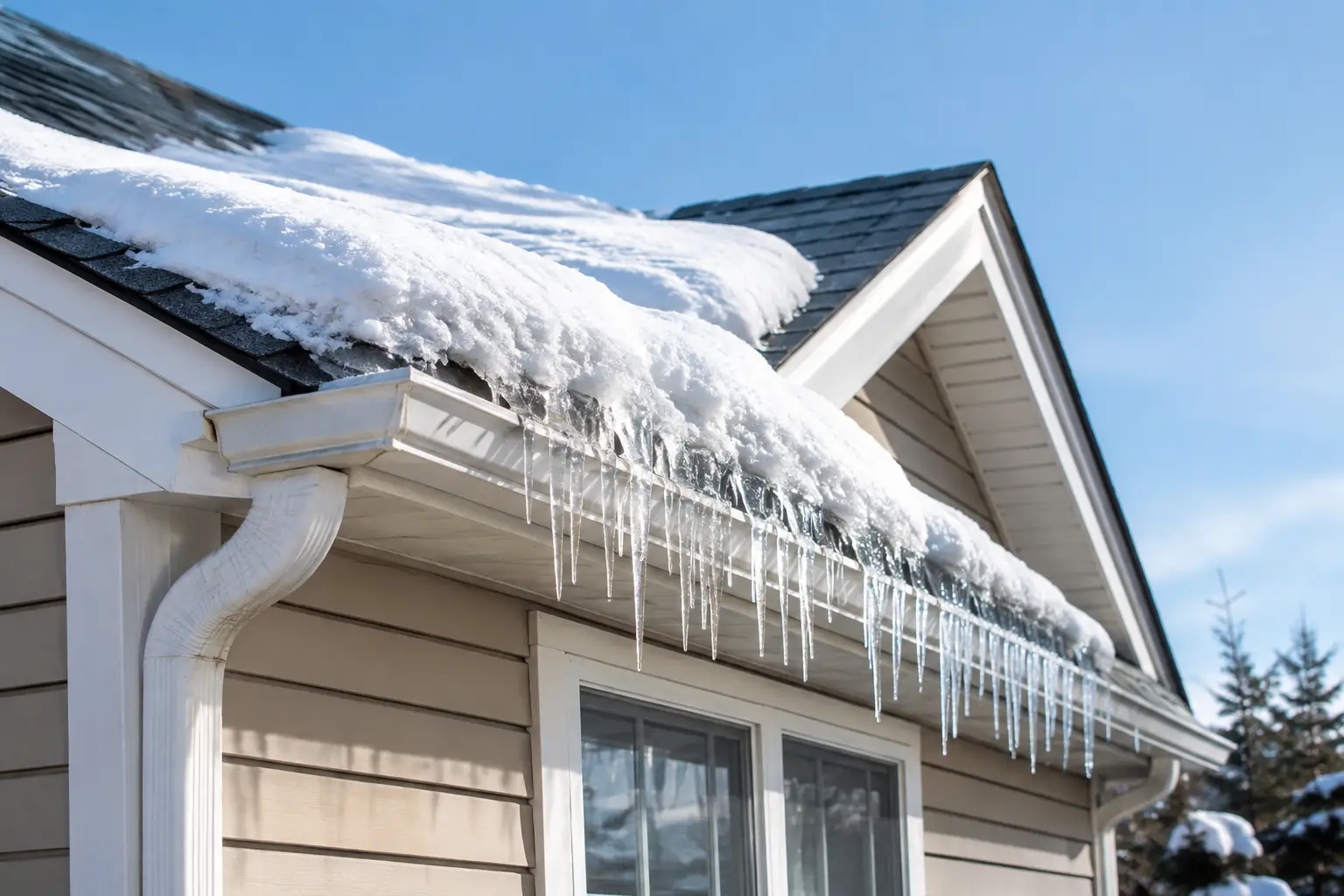
A ridge of ice along the edge of a roof may look harmless after a North Jersey snowfall. It can also be the first visible sign that melting water is backing up beneath shingles. Effective ice dam prevention protects more than the roof surface - it helps prevent leaks, stained ceilings, damaged insulation, peeling paint, and costly repairs when winter weather changes quickly.
For Cedar Grove homeowners, the best solution is rarely a single product or a quick fix after snow falls. Ice dams usually point to a combination of heat loss, attic airflow, roof design, and drainage conditions. A professional inspection identifies what is happening on your property and helps you invest in corrections that provide lasting protection.
Why Ice Dams Form on New Jersey Roofs
An ice dam begins when snow on the upper portion of a roof melts. Heat escaping from the home warms the roof deck above, creating meltwater that runs downward. Near the eaves, where the roof extends beyond the heated living space, temperatures are often colder. That water refreezes and forms a raised barrier of ice.
As more snow melts, water can collect behind the ice rather than draining safely into the gutters. Shingles are designed to shed water flowing downhill. They are not designed to hold standing water that works upward beneath the roofing system. Once water reaches the underlayment or roof deck, it can enter the attic and living areas.
Heavy snow alone does not always cause an ice dam. A well-insulated, properly air-sealed, and correctly ventilated attic can keep the roof surface closer to outdoor temperatures. Problems become more likely when warm indoor air leaks into the attic through gaps around light fixtures, plumbing penetrations, attic hatches, chimneys, and ductwork.
Ice Dam Prevention Starts in the Attic
The most reliable ice dam prevention work addresses the source of uneven roof temperatures. That means looking below the shingles as well as above them.
Air sealing comes before adding insulation
Adding attic insulation can help, but insulation alone may not stop heat from reaching the roof deck. Warm air can move through small openings in the ceiling plane and carry heat and moisture into the attic. Air sealing those openings first is often the smarter approach.
A roofing or exterior professional can look for common problem areas, including gaps around recessed lighting, attic access panels, bathroom fan ducts, electrical penetrations, and the joint between a chimney and framing. The right approach depends on the construction of the home. Older homes in the Cedar Grove area may have hidden bypasses that are not obvious from inside the attic.
After air leaks are addressed, adequate insulation helps hold conditioned air where it belongs - inside the home. Proper insulation levels can improve comfort and reduce heating costs while limiting the conditions that cause snow to melt unevenly on the roof.
Balanced attic ventilation matters
Ventilation works with air sealing and insulation. It is not a replacement for either one. A properly designed system allows cold, dry air to move through the attic, typically entering at the soffits and exhausting near the ridge. This helps reduce heat and moisture buildup beneath the roof deck.
Not every roof can use the same ventilation layout. Cathedral ceilings, finished attics, complex rooflines, and additions require a closer review. Adding more vents without a balanced intake-and-exhaust design may not solve the problem and can create new performance issues. A contractor should evaluate the entire attic and roof system before recommending changes.
Keep Roof Drainage Clear Before Winter
Gutters do not cause every ice dam, but clogged or poorly pitched gutters can make winter drainage worse. Leaves, twigs, roof granules, and debris prevent water from moving toward the downspouts. When temperatures drop, standing water can freeze and add weight along the roof edge.
Before winter, gutters should be cleaned, securely fastened, and checked for proper slope. Downspouts should direct water away from the foundation, and extensions should remain clear of areas where water can refreeze near walkways. If gutters pull away from the fascia, overflow frequently, or show signs of corrosion, repair or replacement may be a better long-term investment than repeated cleaning.
Gutter guards can reduce debris buildup for some homes, but they are not a universal answer. Guard performance depends on the roof pitch, nearby trees, shingle type, and the design of the gutter system. They still require occasional inspection, particularly after storms.
Use the Right Protection During Roof Replacement
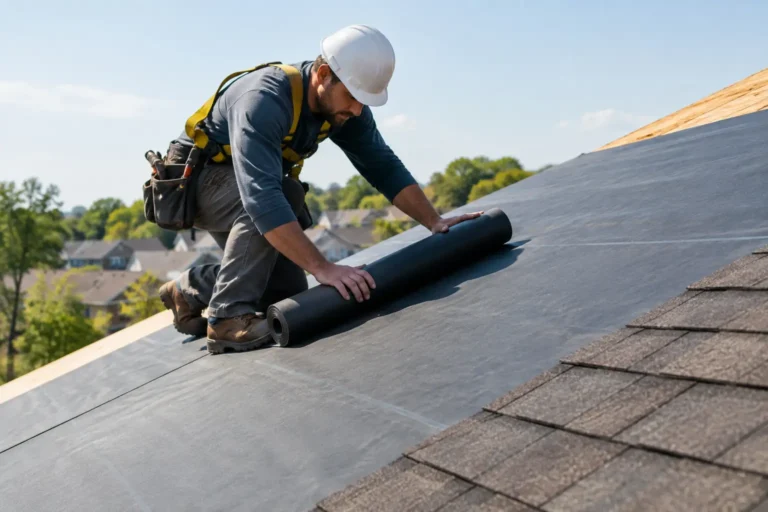
When a roof is being replaced, it is the right time to strengthen its defenses against ice and water intrusion. A quality roofing system includes more than shingles. Underlayment, flashing, edge detailing, ventilation components, and installation methods all affect winter performance.
An ice and water barrier installed along vulnerable roof edges creates an added layer of protection if water backs up beneath the shingles. This self-adhering membrane is particularly valuable in northern climates, but its effectiveness depends on correct placement and preparation of the roof deck. Damaged decking, weak flashing, or poor shingle installation cannot be overlooked simply because a membrane is present.
Roof valleys, skylights, chimneys, dormers, and wall intersections also deserve careful attention. These are areas where water changes direction or concentrates during storms. An experienced roofer will inspect those details, explain any necessary repairs, and build the roofing system to manage water effectively.
All Professional Remodeling Group approaches roofing as a complete exterior protection system, combining expert installation with the material and ventilation details needed for dependable, warranty-backed results.
What to Do When an Ice Dam Is Already There
If you see an ice dam forming, avoid climbing onto an icy roof or using an axe, hammer, shovel, or sharp tool to break it apart. Those methods can damage shingles, gutters, flashing, and the roof deck. They also create a serious fall risk.
A roof rake used safely from the ground can remove loose snow from the lower portion of the roof and reduce the supply of meltwater feeding the dam. Use a rake with a nonabrasive edge and keep clear of power lines, falling snow, and pedestrians below. This is a temporary measure, not a cure for attic heat loss.
If water is entering the home, protect belongings, contain dripping water, and contact a qualified roofing professional promptly. A contractor can assess the roof from a safe position, identify whether the issue is limited to ice buildup or involves a roof defect, and recommend the appropriate repair. Emergency steam removal may be appropriate in severe cases, but it should be performed by trained professionals using the right equipment.
Do not rely on rock salt, chemical de-icers, or heated cables as a first response. Some products can stain or damage roofing materials, harm landscaping, and accelerate corrosion. Heat cables may have a role on certain roof configurations, but they treat a symptom and require thoughtful installation. They are not a substitute for correcting air leaks, insulation deficiencies, or drainage problems.
Signs Your Home Needs a Professional Evaluation
Recurring ice dams in the same location are worth investigating, even if no active leak is visible. Watch for thick ice at the eaves, large icicles, water stains on ceilings, damp attic insulation, moldy odors, peeling exterior paint, or uneven snow melt across the roof. A roof that clears in patches while adjacent sections remain snow-covered often suggests uneven heat loss below.
Commercial properties can face similar concerns, particularly around low-slope transitions, roof drains, parapet walls, and gutters. Building owners and property managers should include winter drainage and insulation conditions in routine roof maintenance planning. Small drainage issues can become larger water-intrusion problems when freeze-thaw cycles continue.
The right time to assess these conditions is before the next major storm. A professional roof and attic evaluation can separate a maintenance issue from a building-performance concern and provide a clear plan for repairs, ventilation improvements, gutter work, or a complete roof replacement when needed.
A dry, protected home in winter begins with a roof system that manages heat, snow, and water as one connected whole. Addressing recurring ice dams early gives you more control over the repair process - and far less chance of discovering a leak when the weather is at its worst.