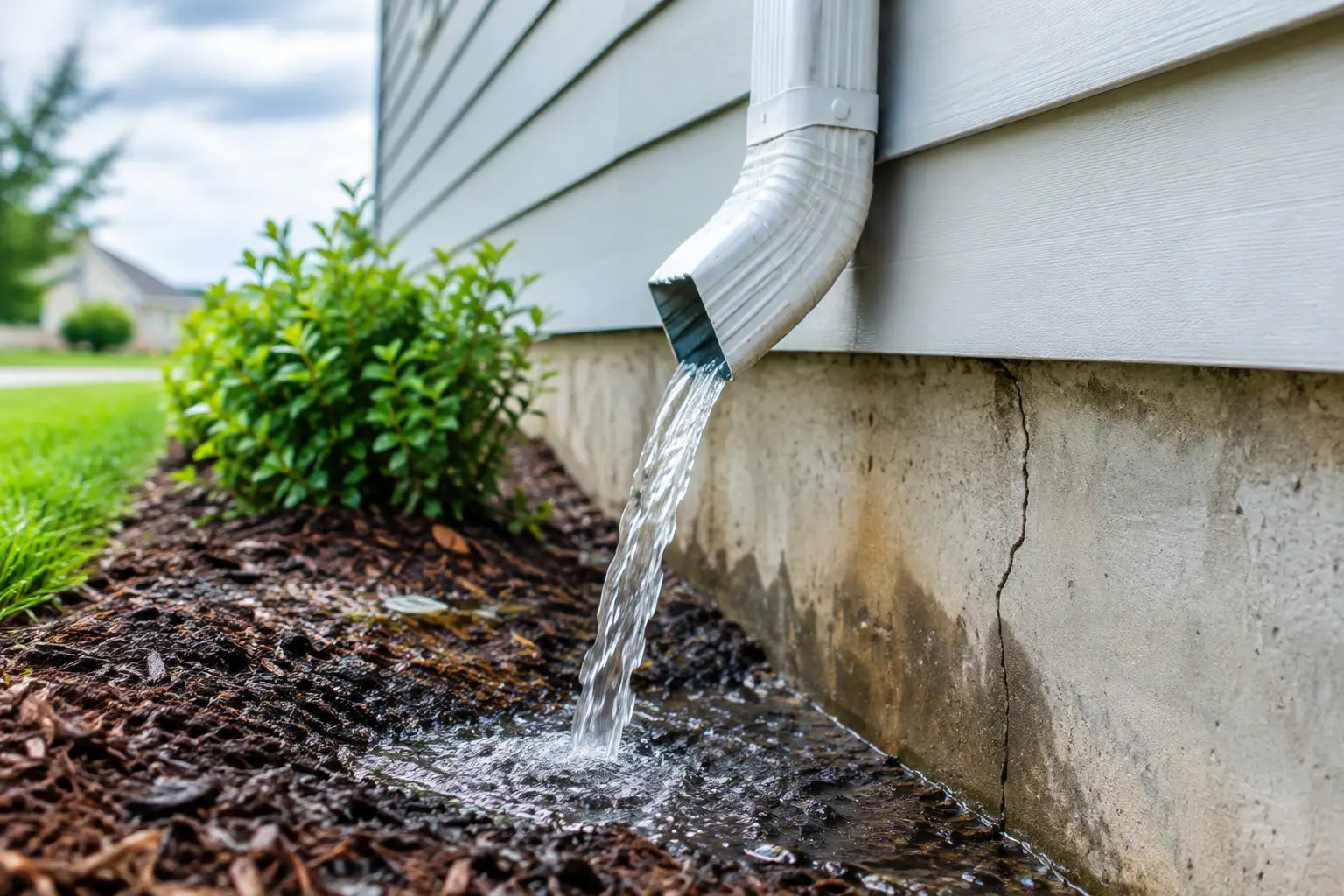
A gutter overflowing beside the same corner of your home during every storm is not a minor maintenance issue. Can gutters damage foundations? Yes. When roof runoff is allowed to collect near the foundation, it can saturate the soil, add pressure against basement walls, and create conditions that lead to leaks, cracking, and costly structural concerns.
In Cedar Grove and throughout northern New Jersey, heavy rain, snowmelt, and repeated freeze-thaw cycles make proper drainage especially important. A well-designed gutter system does more than keep water off siding and walkways. It moves a large volume of water safely away from the part of your property that supports the entire building.
How Gutters Can Damage Foundations
Gutters do not damage a foundation simply by being installed on the home. The problem begins when they fail to collect, carry, or discharge roof water correctly. A single inch of rain on a typical roof can produce hundreds or even thousands of gallons of runoff. If that water pours over the gutter edge or exits at the base of a downspout, the ground around the foundation can become oversaturated quickly.
Soil changes when it gets wet. Clay-heavy soil may expand and place added lateral pressure on foundation walls. Other soils can wash away or settle unevenly as water moves through them. Either condition can contribute to cracking, shifting, or gaps where water can enter. The risk is not the same for every property, but repeated saturation near the house is never a condition to ignore.
A damaged or poorly managed gutter system can also create a cycle that gets worse over time. Water enters a small basement-wall crack, then freezes during cold weather, expands, and makes the opening larger. Moisture can also weaken finished basement materials, encourage mold growth, and damage stored belongings long before a homeowner sees an obvious foundation problem.
Overflowing gutters concentrate water at the wall
Clogged gutters are one of the most common causes of foundation-related drainage trouble. Leaves, roof grit, seed pods, and debris block the channel or downspout, forcing water to spill over the front or back of the gutter. Instead of dispersing across the yard, runoff lands in a narrow strip beside the home.
That concentrated flow can erode landscaping, stain masonry, and create persistent puddles along the foundation. If overflow happens during most storms, the soil may never have enough time to dry properly.
Short or missing downspouts deposit water too close
A working downspout is only effective if it sends water far enough away from the building. Discharging directly at the foundation, or only a foot or two from it, can undo the benefit of an otherwise clean gutter system. Downspout extensions should direct water onto a grade that slopes away from the home and should not send runoff toward a neighbor’s property, driveway, or walkway where it can create another drainage issue.
The right discharge distance depends on lot grading, soil, local drainage conditions, and the location of underground utilities or drains. As a general rule, water should be moved several feet away from the foundation and directed to a stable, appropriate drainage area.
Loose, sagging, or leaking gutters miss their target
Gutters need the right pitch so water flows toward the downspouts. When fasteners pull loose, sections sag, seams separate, or the system was installed with poor slope, water can stand inside the gutter or leak from joints. Water may then run down the fascia, behind siding, or onto the ground beside the house.
These issues are often visible from the ground: gutters that appear uneven, dripping corners after rain stops, streaking on siding, or water pouring over one area while the rest of the gutter appears dry. Prompt repair can protect both the roof edge and the foundation drainage zone.
Warning Signs That Water Is Reaching the Foundation
Foundation damage has several possible causes, including settlement, construction conditions, tree roots, and drainage problems. Still, the following signs are worth taking seriously when they appear near failing gutters or downspouts:
Water pooling beside exterior walls after rain or snowmelt
Soil erosion, mulch washout, or bare trenches beneath downspouts
Damp basement walls, musty odors, or recurring water on the floor
New cracks in basement walls, masonry, drywall, or flooring
Gutters overflowing, sagging, or leaking at seams and corners
No one sign automatically means the foundation has suffered structural damage. Hairline cracks, for example, can be common in concrete. But moisture, movement, or cracks that grow over time should be evaluated by the appropriate professional. Addressing the water source early can prevent a manageable gutter repair from becoming a larger drainage or foundation project.
The Drainage Details That Matter Most
Keeping gutters clean matters, but it is only one part of a complete water-management plan. A reliable system starts with properly sized gutters and downspouts that can handle the roof’s runoff volume. Larger or steeper roof sections may require additional downspouts, particularly where valleys send a heavy stream of water into one gutter area.
Installation quality matters just as much. Gutters should be securely attached, pitched accurately, sealed at joints, and positioned to catch water from the roof without allowing it to overshoot. The fascia and roof edge should also be inspected, because rot or failing flashing can compromise the gutter attachment and allow water behind the exterior finish.
Ground conditions deserve attention, too. Even a properly extended downspout cannot solve every issue if the land slopes toward the home. The finished grade should generally carry surface water away from the foundation. In some situations, a buried drainage line, splash block, catch basin, or other drainage solution may be appropriate. The best approach depends on the property, not a one-size-fits-all fix.
Gutter guards help, but they are not a cure-all
Quality gutter guards can reduce the amount of leaves and debris entering the system, which may lower cleaning frequency. They can be a practical choice for homes surrounded by mature trees. However, guards do not correct poor gutter slope, undersized downspouts, loose hangers, or bad grading.
They also still need periodic inspection. Fine roof grit and small debris can collect on top of certain guard styles, while downspouts can clog below the guard. Homeowners should view gutter guards as a maintenance aid, not a replacement for professional assessment and routine care.
A Practical Maintenance Schedule for New Jersey Homes
For most homes, gutters should be inspected and cleaned at least twice a year - typically after spring pollen and seed debris, and again after fall leaf drop. Homes near dense tree cover, pine trees, or large roof valleys may need more frequent service.
After a major storm, walk around the property when it is safe to do so. Look for water spilling over the gutters, downspouts that have disconnected, extensions that shifted, and washout near the home. Avoid climbing ladders or walking on the roof unless you have the training and equipment to do so safely. Many gutter problems can be identified from the ground, and professional service is the safer choice for elevated repairs.
During winter, watch for ice buildup and unusually heavy icicles. Ice dams are primarily a roof ventilation and insulation concern, but blocked gutters and frozen downspouts can worsen water backup at the roof edge. Do not chip ice out of gutters with sharp tools, as this can damage the gutter, roof shingles, and flashing.
When to Call a Gutter Professional
Call for an inspection when gutters pull away from the house, overflow despite cleaning, leak at multiple seams, or drain too close to the foundation. It is also wise to seek help if you have recurring basement moisture or notice the same drainage problem after every storm. A professional can assess gutter condition, downspout placement, roof-edge details, and visible grading concerns as part of the larger exterior system.
All Professional Remodeling Group helps Cedar Grove-area property owners protect their homes with expert gutter installation and repair backed by the same careful workmanship applied to roofing and exterior remodeling. The goal is not simply to stop a drip. It is to move water where it belongs and help protect the building from the roofline down.
If water is collecting beside your home, act before the next prolonged rain turns a drainage concern into a repair bill. A timely gutter inspection can provide a clear path forward and help keep your foundation dry, stable, and protected for the long term.