Finding coarse, sand-like particles in a gutter or at the bottom of a downspout can be unsettling. Those particles are asphalt-shingle granules, and while a small amount of shedding can be normal, heavy or sudden loss deserves attention. Understanding what causes roof granule loss helps Cedar Grove property owners separate routine aging from a roofing problem that could lead to leaks, premature replacement, or insurance questions.
Why Roof Granules Matter
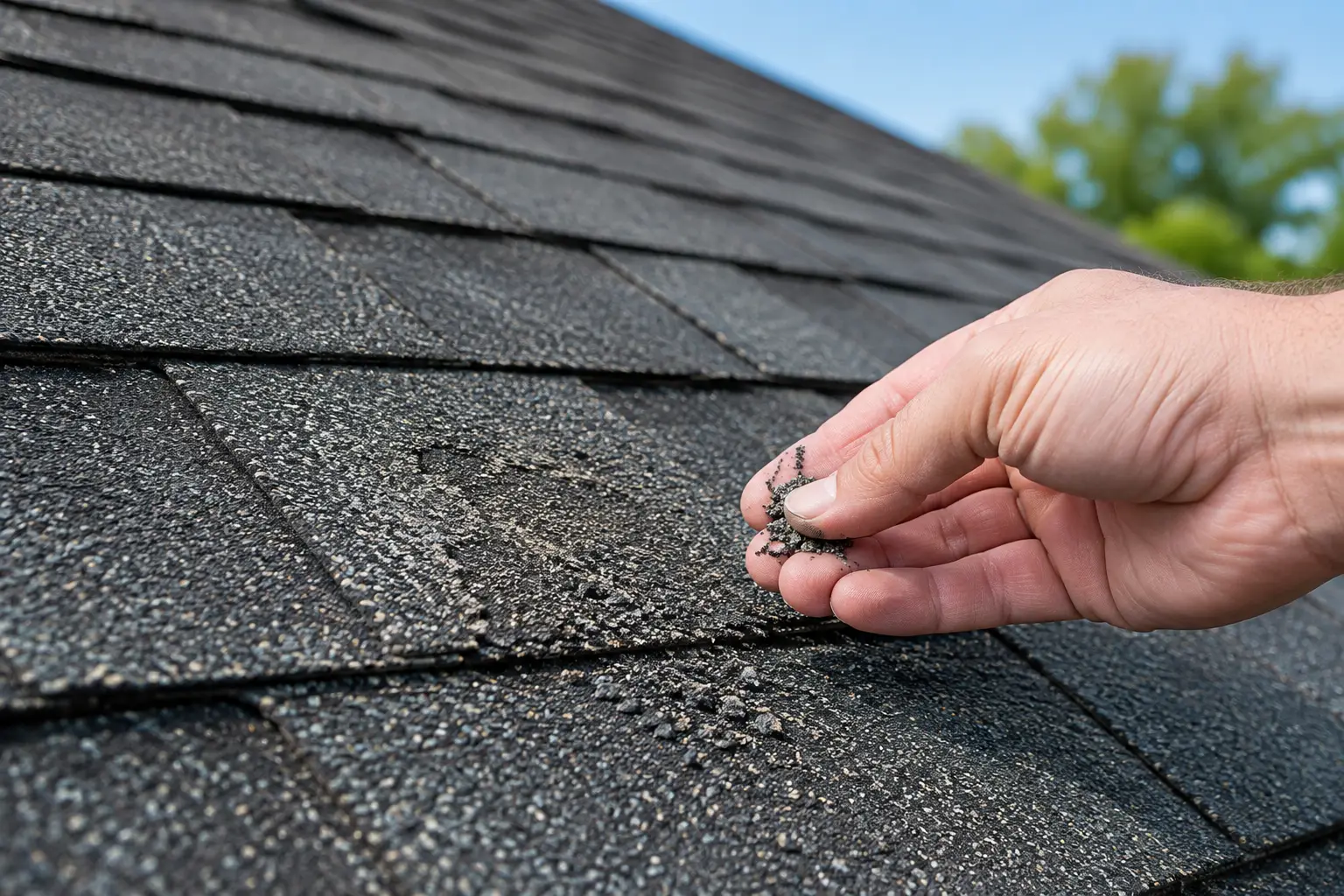
Granules are the mineral-coated surface of an asphalt shingle. They give the roof its color, but their job is far more practical than cosmetic. This protective layer shields the asphalt beneath from ultraviolet exposure, helps shingles resist weathering, and adds a degree of fire resistance.
Once granules wear away, the darker asphalt layer is exposed to more heat and sunlight. Over time, that exposure can make shingles dry out, crack, curl, and lose their ability to shed water properly. Granule loss is not always an emergency, but it is a visible clue about the condition of the roofing system.
What Causes Roof Granule Loss?
Several factors can remove granules from asphalt shingles. The right response depends on the roof's age, the amount and pattern of loss, and whether other damage is present.
Normal Manufacturing Shedding on a New Roof
New shingles can release a small amount of excess granules after installation. Manufacturers apply more granules than necessary so the shingle surface is fully covered, and loose material may wash into gutters after the first few rainstorms.
This is usually limited and short-lived. If a newly installed roof continues producing large amounts of granules, or if bare patches are visible from the ground, it should be inspected. Installation quality, product handling, and ventilation all affect how a new roof performs.
Natural Aging and Sun Exposure
Asphalt shingles do not last forever, especially through New Jersey's changing seasons. Years of sun, heat, rain, freezing temperatures, and moisture gradually weaken the bond between granules and asphalt. This is one of the most common reasons older roofs leave granules in gutters.
Aging-related loss is often spread across broad areas of the roof rather than concentrated in one spot. If the shingles are also brittle, curled, cracked, or missing tabs, the roof may be approaching the point where replacement offers better long-term value than repeated repairs.
Storm Damage From Wind, Hail, or Falling Debris
Severe weather can cause abrupt, localized granule loss. High winds may lift shingle edges and loosen the surface coating. Hail can knock granules away on impact, leaving dark spots or circular marks that may be difficult to identify without a close inspection.
Tree limbs and windblown debris can also scrape the shingle surface. After a significant storm, avoid climbing onto the roof yourself. Check the ground and gutters for unusual debris, look for missing or displaced shingles from a safe location, and arrange a professional assessment if you see signs of damage.
Poor Attic Ventilation
Ventilation is one of the most overlooked causes of early roof deterioration. In summer, trapped attic heat can overheat the underside of the roof deck and shingles. In winter, warm indoor air can contribute to condensation and ice dams when attic insulation and airflow are inadequate.
This constant heat and moisture stress can accelerate asphalt aging and granule loss. A roofing evaluation should look beyond the shingles. Proper intake and exhaust ventilation, insulation conditions, and moisture control all play a role in protecting the roof from the inside out.
Physical Wear From Foot Traffic and Maintenance
Asphalt shingles are designed to resist weather, not regular foot traffic. Walking on a roof can dislodge granules, particularly on hot days when the asphalt is softer or on an older roof that has become brittle. Improperly installed holiday lights, satellite equipment, or rooftop accessories can create similar wear.
Necessary work such as chimney repair, skylight service, or gutter maintenance may require access to the roof. The key is using qualified professionals who understand where and how to walk, protect the shingles, and inspect flashing after the work is complete.
Low-Quality Materials or Incorrect Installation
Not every roof ages at the same rate. Lower-grade shingles may have a shorter service life, while improper installation can make even quality materials vulnerable. Nail placement, deck preparation, flashing details, underlayment, and ventilation must work together for a roof to perform as intended.
A roof with widespread early granule loss may point to a material defect or installation issue, though a proper inspection is needed before reaching that conclusion. Keep records of the installation date, warranty documents, and any storm events. This information can be useful when determining the next step.
When Granule Loss Is a Warning Sign
A few granules in the gutter do not automatically mean the roof is failing. Granules can collect over months and become noticeable after a heavy rain. The concern rises when loss is persistent, heavy, or paired with visible shingle changes.
Look for dark or shiny areas where the asphalt appears exposed, uneven color across roof slopes, bald spots, curling edges, cracking, loose shingles, or granules collecting in piles near downspouts. Indoors, water stains on ceilings, musty attic odors, and damp insulation require prompt attention, whether or not granule loss is visible.
Granule loss on one section of the roof can be particularly telling. A south- or west-facing slope may age faster because it receives more direct sunlight. A concentrated damaged area may instead suggest hail, a branch strike, poor drainage, or mechanical wear. The pattern matters as much as the amount.
Can Granule Loss Be Repaired?
Granules cannot be permanently put back onto a worn shingle in a way that restores its original protection. Coatings marketed as a quick fix may change appearance, but they are not a substitute for sound shingles, correct flashing, and a properly installed roofing system.
If the issue is confined to a small area, a targeted repair may be appropriate. Replacing damaged shingles and correcting the underlying cause can extend the roof's useful life. If loss is widespread and the shingles are near the end of their expected service life, replacement is often the more dependable investment.
The decision should be based on the full roof condition, not gutter debris alone. A professional inspection can identify whether the decking is sound, flashing is intact, ventilation is adequate, and repairs will provide meaningful value.
How to Protect Your Roof Going Forward
Homeowners can reduce unnecessary wear by keeping gutters clear, trimming branches away from the roof, and addressing clogged downspouts before water backs up at the eaves. Avoid pressure washing asphalt shingles or using harsh cleaning methods, as both can strip granules and shorten roof life.
Schedule a roof inspection after major storms and as the roof nears its expected service life. Routine inspections are especially worthwhile before selling a property, starting solar work, or completing exterior upgrades such as new gutters, siding, skylights, or windows. These projects affect connected parts of the building envelope, and planning them together helps prevent avoidable rework.
For Cedar Grove homeowners and commercial property owners, All Professional Remodeling Group provides expert roofing solutions built around thorough assessment, quality materials, and lasting results. If granules are showing up more often in your gutters or the shingles look worn, a professional evaluation can provide clear answers before a small concern becomes a costly water problem.